'70s movies
What set '70s cinema apart from any previous decades was a new boldness; the '70s gave us a new, in-your-face assaultive style that brought new ideas—like it or not—to the screen. Here was the creative battlefield; a staging ground for newer techniques, sharper scripts, and higher production standards. Seventies cinema crossed the line of what was once considered acceptable and traditional film making. In short: there were many movies you didn't want to take Grandma to.Nudity was a big factor, profanity was a second. Blood and guts were never more vibrant on the big screen than when they spewed out onto '70s theater screens.
Drama & Intrigue
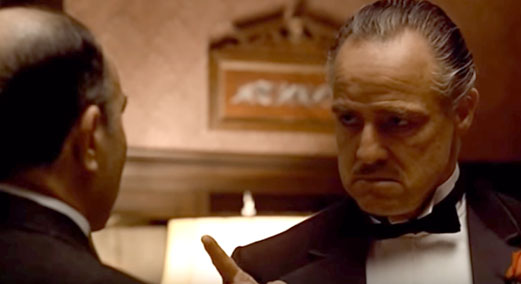 Though the 60's were an experimental period for film, the '70s refined the art. '70s movies allowed for more cinematic freedom, and gave filmmakers the opportunity to create expressionistic pieces. Sometimes these pieces came with sweeping overtures of aural and visual wonder, and sometimes they just fell flat on their faces.
 Whatever was going on in the studio in the '70s, it was going full throttle. Film returned to art in the '70s, and the epics that were created with masterful prowess lived forever as great American classics. The likes of "The Godfather," "Ryan's Daughter," and "The Sting" were among such examples. The '70s also proved that masterpieces no longer had to run two-plus hours to prove their point. Hard-hitting dramas with core-twisting emotive values gave audiences some of the finest films ever made. "Coming Home," "Norma Rae," "Deliverance," and "The Conversation" are just a few.
 The dark side of human nature was explored to its fullest in the '70s.
No other era would have felt the liberty to give us the unbalanced the "Taxi Drivers" of our society. In previous decades, it was doubtful that Hollywood would ever survive such taboo topics as hillbilly male rape or unwatchable scenes of torture. Yet, in 1972's "Deliverance," and 1976''s "Marathon Man," these elements stunned viewers and are still referenced today. After witnessing movies of this caliber—though finely made&mdashmany of us were afraid to go camping, take a canoe trip, go to the dentist, or even swim in the ocean.
A film has to be commanding to be able to embed such fears in the human psyche. Shock value was a factor in some storylines, but not all. The '70s were responsible for some of cinema's greates moments. The era produced unforgettable motion pictures that set the template for future films.
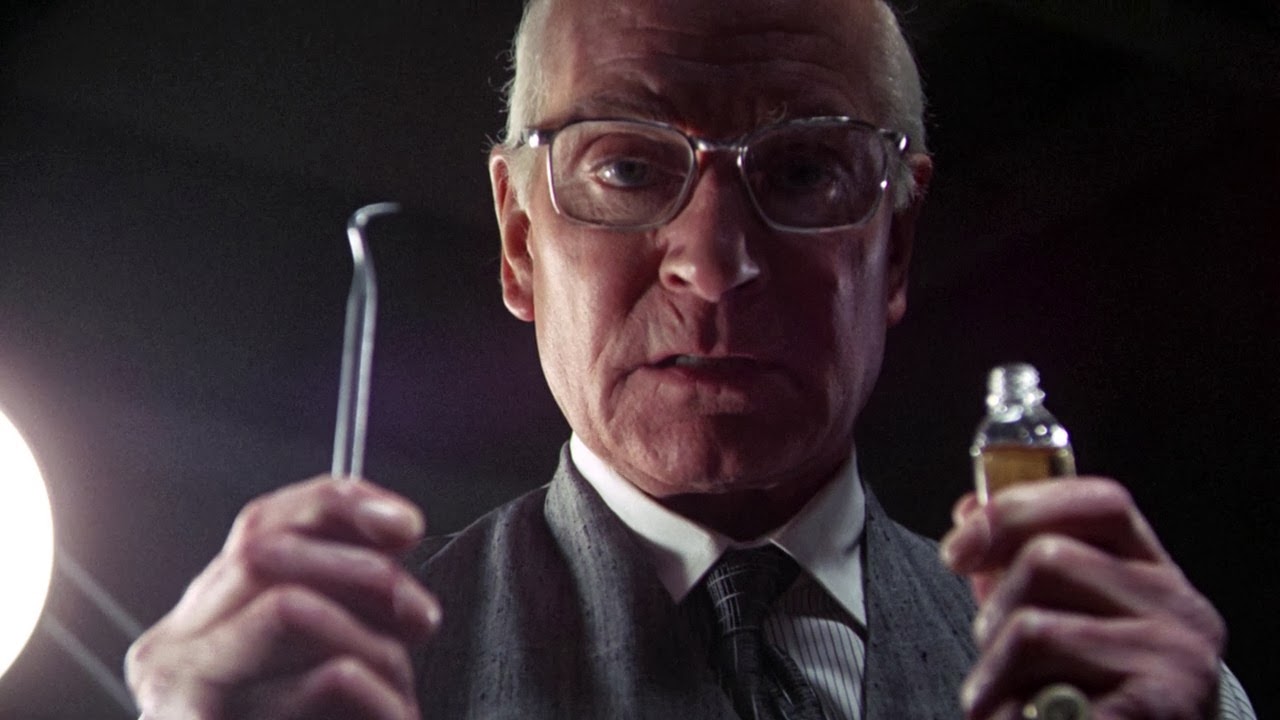
Actors and actresses were perfecting their craft. A role became more than just words on a script; it turned into a performance, and quite often, an unforgettable one.
"Super actors and actresses" were born, turning scripts inside out, and showing us characters more real than we could have possibly imagined. Relative new-comer Robert De Niro taught us all a lesson about acting: don't memorize your lines; be your lines.
War is Hell
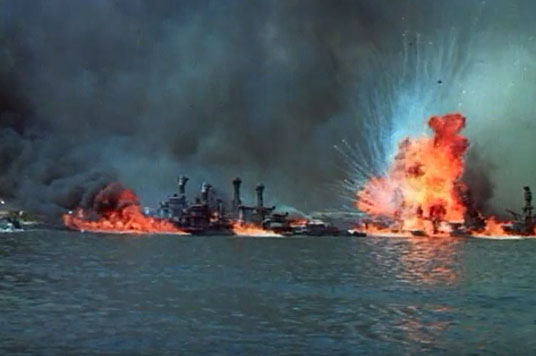 War on the '70s big screens was quite the event. Not only were the films being displayed in 35mm and wider than a city block, more realism was added to the mix. Beautifully orchestrated battle scenes filmed from the air and pyrotechnics beyond our wildest dreams gave us some gritty and well-honed war films. "Tora, Tora, Tora!" was an exemplary big screen spectacle about the attack on Pearl Harbor.
  "Patton" was a big-budget blockbuster which gave George C. Scott the opportunity to jump on the refuse-the-oscar band wagon. The themes were all over the place, and some of the most astonishing themes of war, and coming home from war, came toward the end of the decade."Coming Home" utilized some of Hollywood's best talent as did 1978's "The Deer Hunter". Coming back from war was not an easy thing, and no matter how hard the cinema tries to explain PTSD, or the horrors of war on film, it never hit home unless one had actually experienced it. However, some of these movies came about as close as possible.
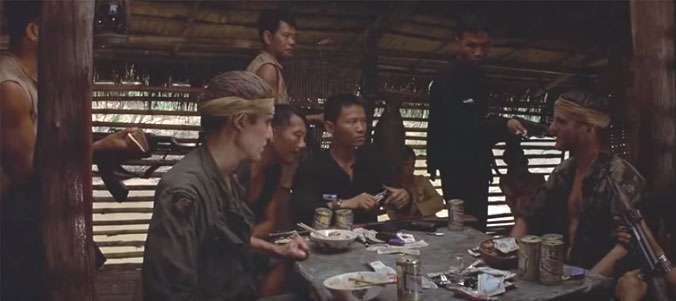
Other countries gave us "Solider of Orange" and "The Tin Drum" were two of the strangest movies I've ever seen. The big-budget heavily cast "A Bridge Too Far" was once critiqued with the title switch of "A Movie Too Far." It appears that everybody and their dog was in this one. 1979 offered "Yanks", a very good film about American soldiers stationed in England waiting to be shipped off to war. "Yanks" took a respectful view of the love story abroad theme, and showed true humanity by the way lives were shattered by war.
Moviegoers were stunned with 1979's hitting-below-the-belt debut of "Apocalypse Now". The horror of war strived for new levels of shock, and Apocalypse Now delivered the goods. Truly a thesis on the managed insanity of some who carried weapons, this film shows us a war like we've never seen or imagined before. This was a war where the enenmy wasn't just human; it was the jungle, the heat, the insanity of soldiers too long in the bush, and covert military leadership.
People refer to "Apocalypse Now" as Francis Ford Coppola's greatest movie, but I always felt the film truly belongs to Martin Sheen. Take one sharp and flamboyant director, add an outstanding cinemaphotographer, toss in some genuine acting talent and baste with an eerily appropriate film score, and you have the recipe for an unforgettable film: "Apocalypse Now".
 Breathtaking film presenting as a cinematic painting as striking as anything from Van Gogh or Monet: Sir David Lean's "Ryan's Daughter." In 1970, this movie received harsh reviews, and reportedly suffered from numerous problems with the actors, but this is nonetheless a visual masterpiece. (Sir David also waited an entire year for the perfect coastal storm to capture on film!) David Lean created unforgettable epics that were his trademark. With previous monster-successes like "The Bridge on the River Kwai," "Doctor Zhivago," and "Lawrence of Arabia," movie-goers just assumed they'd be in their seats for a long time. David "filmed" stories instead of just relaying what actors read from scripts. In his works, the viewer feels loneliness and isolation, desperation and triumph. Sir David is one of the few filmmakers I can think of that can pull you into a movie with sweeping vistas, and for a time, make people forget the world around them.
 Steve McQueen re-invented Hollywood-tough and gave us a new and improved "strong silent type." Sam Peckinpah's "The Getaway" is a terrific film, one of McQueen's best, and at the time gave us roller coaster action mixed with highly-pleasing violence. In "Junior Bonner" McQueen is mesmerizing, and I found off any single moment of this movie. Critics have referred to this movie as "Peckinpah's gentle film". That's all true, but what the critics left out is that it's one of his best.
Coming of Age
Coming of age films were always among my favorites because I felt that they had something to say to me. As a younger guy I enjoyed what these movies had to offer&mdashand ultimately, teach.  1971's beautifully stated "Summer of '42" is a faithful representation on the theme of growing up. The photography is top notch, the music incredible and the acting exquisite. Top model Jennifer O'Neill played her role with intensity. Though the bulk of her part really required only "modeling", it's at the end where she shines brilliantly.
"Red Sky at Morning" is a faithful-to-the-novel film about a high schooler learning to live and adjust to life in Mexico during WWII. Richard Thomas was an actor that came with a guarantee: no matter what, he'd put everything he had—and more—into a role. Often it seemed difficult for him to shed "John Boy", but Thomas never disappointed.
1971's beautifully stated "Summer of '42" is a faithful representation on the theme of growing up. The photography is top notch, the music incredible and the acting exquisite. Top model Jennifer O'Neill played her role with intensity. Though the bulk of her part really required only "modeling", it's at the end where she shines brilliantly.
"Red Sky at Morning" is a faithful-to-the-novel film about a high schooler learning to live and adjust to life in Mexico during WWII. Richard Thomas was an actor that came with a guarantee: no matter what, he'd put everything he had—and more—into a role. Often it seemed difficult for him to shed "John Boy", but Thomas never disappointed.
 Beautifully photographed in black and white, "The Last Picture Show" is an excellent film about growing up in a small nowheresville town in Texas where everybody knows everybody's business. All actors shine in this one (though I feel Cybill Shepherd stuggled). Ben Johnson and Ellen Burstyn were on top of their game in a film that faithful to the original novel peice-by-piece. "Buster and Billie" Offered up an awkward love story but, ended with sleazy violence and death. Listening to Jan-Michael Vincent struggle with a southern accent is tough, but he still manages to bring it to the screen. Actress Joan Goodfellow is the true pearl to this film, and her quiet presence commanded the screen. The ending is the only thing that destroys this movie, but while it's going, it's worth watching.
Who couldn''t love a character named "Terry the Toad"? "American Graffiti" became the blueprint for '60s nostalgia. It's a very good movie full of fun—especially for anyone who grew up in the '60s (like me). It also boast the reputation of being the forefather of the "soundtrack saturation" technique that fills a movie with constant period music. It's only too bad that it's even remotely acquainted with the TV sitcom "Happy Days". 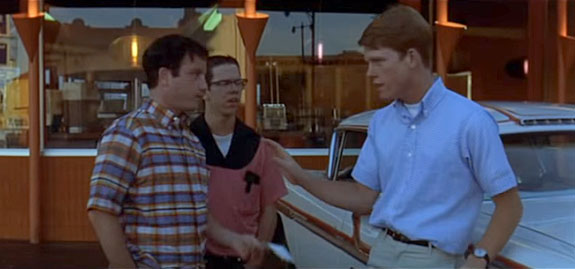
Movies rarely got any better than 1979's "Breaking Away". I've always considered this one to be a perfect movie; it delivers the goods without the use of sex or foul language.(Imagine that). As a coming of age film, I can think of few better. "Breaking Away" has enough goofiness, drama, and painful growing up metaphors to satisfy the reminiscence of many viewers.

The Great Directors
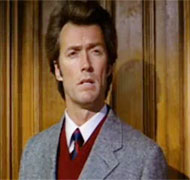
 Directors splashed onto screens with the same propensity as their actors. The list could go on forever, but '70s film gave us some of the finest filmmakers the world had ever seen. Though many had gotten their start in the '60s, the styles and techniques of the '70s made these directors international icons. Names like
  Coppolla, Spielberg, Lucas, Eastwood, and Peckinpah are only examples of box office names that confindently drew audiences more than the stars who headlined their films.
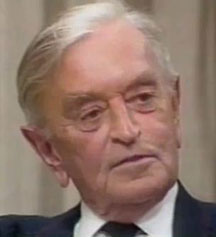
Sir David Lean was a cinematic expressionist that captured the heart of dynamic cinema in his films. The word "sprawling" would be an excellent description of his works. "Doctor Zhivago" takes us through entire changes of seasons with cinematography that is to this day, mind-boggling. "The Bridge on the River Kwai" was—in the David Lean tradition—long, but its two and a half hours fleshed out an outstanding storyline of good and evil, and dedication vs. duty. The blowing of the bridge scene with the train crossing it was a very expensive one-time-only shot, well worth seeing.
 John Schlesinger was an in-your-face storyteller who was famous for visual and mental assaults on a viewer with some of the most impacting scenes ever. Stylish, and unforgettable films were a part of John Schlesinger's signature style.
"Marathon Man" is a perfect thriller, end of story. "Midnight Cowboy" is sad and haunting, not only in the sense that it didn't even try to follow the novel correctly, but the fact that the lead characters' miserable lives were deeply affecting.
John Schlesinger was an in-your-face storyteller who was famous for visual and mental assaults on a viewer with some of the most impacting scenes ever. Stylish, and unforgettable films were a part of John Schlesinger's signature style.
"Marathon Man" is a perfect thriller, end of story. "Midnight Cowboy" is sad and haunting, not only in the sense that it didn't even try to follow the novel correctly, but the fact that the lead characters' miserable lives were deeply affecting.
 Peter Bogdanovich became the "King of Black and White" bringing us incredibly artistic renderings that gave us a feeling of the period in which his stories took place. "Paper Moon" and "The Last Picture Show" are must-see movies. The latter gave us a dreary view of a small northern Texas town, complete with frigid high wind, tumbleweeds, and rickety buildings. It's a postcard of a movie filled with great performances.
Francis Ford Coppolla performed an unheard of task in 1974: he created a sequel that was superior to its original with "The Godfather Part II." Clint Eastwood fathered "Dirty Harry," the bad cop that we all loved and couldn't get enough of. Sam Peckinpah, a former stunt man, gave us a new style in film: beautiful violence. His slow motion over-the-top bloody shoot-outs were legendary. The bulk of his films made action the real star.  As much as Alfred Hitchcock made most women afraid of taking a shower, Steven Spielberg made a nation extremely apprehensive of one of our most beloved pastimes: going to the beach and splashing in the ocean. With "Jaws", he put an end to "sun and fun," and for some, shattered the beach experience entirely. Spielberg was also a master innovator who proved to us all that even the impossible seemed possible. He gave us UFO's, incredibly realistic dinosaurs, and special effects that remain the most imitated of any director I can think of.
Sci-Fi & Horror
 Science Fiction never saw such brilliant and iconic moments as they did in the '70s. This was a decade of memorable plots, actors, and visuals. Sci-fi, in the 1970s, was on top of its game. "Soylent Green", "Logan's Run", "The Omega Man," "Rollerball," and "Silent Running" were just a spattering of cinematic stars in an endless galaxy of science fiction wonder. span class="yellow">"Star Wars" went beyond the tradition of money-making hits performing the impossible: it made it okay to just have fun at the movies again! No need to analyze the story line, just get in there and have fun!
In 1973, many movie-goers hadn't quite fastened their seat belts for a horror movie called "The Exorcist." The rumors of people "fainting in the aisles, screaming, and running out of the theater" were true. The movie had "unsee-able" visuals and an outright atmosphere of pure evil which made it a top draw.
The fainting in the aisles were largely due to the overly graphic medical testing scenes. Overall, "The Exorcist" was believable. What happened to an innocent 12 year-old, could happen to any one of us. "The Exorcist" was Ellen Burstyn's movie. She created the fear in this movie by taking us along for the ride on her own journey of horror.  The manner in which she describes her daughter to a priest "That thing upstairs is not my daughter," is one of the most convincing scenes in movie history. The movie was uncomfortable, at times freakish, and often scary. The makeup alone was incredible-especially for Max Von Sydow's character of Father Merrin; (Von Sydow was only in his 40's when the film was made).
 Further demonic themes flourished in 1975's "The Omen." Though supported by earlier-period actors Gregory Peck and Lee Remick, the film is a stand-alone giant with a shudder value of a perfect ten. The story challenges our own beliefs by offering us a modern day introduction to th Anti-Christ. The story told us that Satan was indeed real, and living as a small boy. The marks of 666 embedded into the child's hair were pure genius. There's nothing but evil, fighting evil, then ultimately destroying evil. Though Biblically, the story and events are completely wrong, but "The Omen" still makes for a highly thought-provoking movie. Also effective: the Jerry Goldsmith score which was almost more frightening than the movie itself. And if that's not enough, consider it a good research film if you ever want to get a Rotweiller dog 😀.
'70s action films
 '70s death and destruction on film only spelled disaster, and the disaster films were extremely popular. Being special effects heavy drew audiences like magnets to see and hear death and destruction on the wide screen wiht Dolby sound. The concurrent theme of these movies was the fact that the disaster usually evolved around something safe, such as amusement park rides, airplanes, high-rise buildings, or pleasure cruises. Their recipe also shared one unique ingredient: they were star-studded. A literal cavalcade of stars were presented in these movies which helped to beef up the individual character story lines.
Even seemingly harmless swarms of bees got star billing. Remember the "Killer Bees"myth that circulated in the latter '70s about a species that threatened to wipe out mankind? They were a deadly swarm from South America, migrating slowly, but surely heading to a neighborhood near you. Well, that never happened. However, Irwin Allen, the "Master of Disaster," managed to bring them to a theater near us with 1978's "The Swarm." Even better was the newest innovation in sound: Sensurround This was an audio-enhanced technique designed to rattle theater seats, and was used in 1974's "Earthquake." It was also used again for the films "Midway" and "Rollercoaster." Then came death from the skies in a string of"Airport" movies. Essentially, if it could be ridden, crashed, burned, and toppled as loudly as possible, and with just as many stars narrowly escaping death, it was a box office draw. Death on the high seas came with"The Poseidon Adventure" as yet another cast of stars struggled to keep their careers afloat on a ship turning belly up. Ernest Borgnine is always great, but seeing my hero Gene Hackman as a hip priest delivering ridiculous dialogue truly disappointed.
Revenge: Movies best served cold.
Welcome to the dumbing-down of American cinema.
 There were quite a few 1970s action films that thrived on good old violence. Any story line that had revenge as the biggest motovator was guaranteed to pack movie houses. Why? Because revenge always spawned a new Hollywood hero for us popcorn chompers to worship. Retribution was responsible for bringing forth the worst actors from the B-movie basement who earned places in American hearts. The Bad, The Mediocre, and The Awful saw their shining hours in the '70s. Actors like Tom Laughlin gave us Billy Jack —Mr. peace and love through physical violence who inspired three sequels it's-so-bad-it's-good division of Hollywood action. Revenge characters usually had a talent for violence, whether learned or inherited. These guys were masters of destruction that usually always ended with broken bones, maiming or killing.
To Bruce Lee, or not to Bruce Lee...
Many of us '60s kids remember him as "Kato" on "The Green Hornet". We all had a new hero who came armed with screaming fury, rapid-fire punches and kicks spinning faster than fan blades. Bruce appeared in his first American production of "Enter The Dragon". Though he was a successful star in China, Little did we know that "Enter the Dragon" would be his magnum opus.  Bruce Lee transcend being a "star" and instead became a household word; by 1973, there was probably not a soul in the world who hadn't heard of him.
Martial arts played a fairly healthy part in revenge films. Karate and Kung Fu had a big heyday in the '70s thanks to Bruce. The martial arts ingredient list usually had the following: a bully, or group of bullies getting "the worst surprise of their lives" by whomever was starring in the film. Aah, but it didn't stop there. The more these morons were beaten to a pulp did they learn not to mess with this guy again? No; they simply re-organized, got more guys, more weapons, and got more rear ends kicked all over again. And on and on it went, time after time. Welcome to martial arts in '70s cinema, affectionately known as Chop Sockey the most brain dead genre ever laid to celluloid.
Bruce Lee transcend being a "star" and instead became a household word; by 1973, there was probably not a soul in the world who hadn't heard of him.
Martial arts played a fairly healthy part in revenge films. Karate and Kung Fu had a big heyday in the '70s thanks to Bruce. The martial arts ingredient list usually had the following: a bully, or group of bullies getting "the worst surprise of their lives" by whomever was starring in the film. Aah, but it didn't stop there. The more these morons were beaten to a pulp did they learn not to mess with this guy again? No; they simply re-organized, got more guys, more weapons, and got more rear ends kicked all over again. And on and on it went, time after time. Welcome to martial arts in '70s cinema, affectionately known as Chop Sockey the most brain dead genre ever laid to celluloid.
 However, more top-quality talent also had their say in these films. Jan-Michael Vincent and Charles Bronson both headlined a number of '70s revenge classics. Though the intentions were somewhat pure, some of these films were extremely violent and sometimes left a sick feeling in the pit of the stomach. We claimed to be entertained, and though we may have loved the revenge exacted by our heroes, it was often carried out in extreme methods. '70s revenge was creative, more to the scale of driving a truck through someone's bedroom window killing all the family including the kids, or attacking not the antagonist, but their family. '70s revenge was highly unfulfilling, and in fact, had the ability to anger and unnerve audiences to a point where they felt they'd been duped into being entertained.
The "revenge" business was not only fruitful in creating iconic anti-heroes, but for giving us the dreaded "sequel disease"—parents to further violence down the road. Shall we? Why not.
ENTER "BILLY JACK":
"Born Losers" Why was this movie ever made to begin with? Perhaps to cash in on all the Hell's Angels drive-in trash."Billy Jack" Why did they make a supposed sequel? Same answer.
"The Trial of Billy Jack" Why didn't they just stop? Because there were enough 12-year olds in the world who thought Tom Laughlin should get an Academy Award.
"Billy Jack Goes to Washington" Why did he go to Washington? Because it was there.
ENTER "WALKING TALL":
"Walking Tall" Enter a bat-swinging vigilante named Bufford Pusser. The most horrible aspect of this is that it's a true story. I guess. Sort of.
"Walking Tall Pt. II" Whoever didn't get slaughtered, maimed, stabbed, shot, beaten, or horse whipped in the first, got it in this one. Beautiful cinema.
"Walking Tall The Final Chapter" Thank Goodness.
ENTER "DEATH WISH":
"Death Wish" "Death Wish" Basically a great movie. Only flaw: extremely over-the-top and unnecessary wife and daughter rape scene. The story could have been told without it. Instead, audiences were visually bludgeoned to a point where anything that happens to the scum in this film is completely justifiable.
"Death Wish II" Why? Why not?
"Death Wish III" I had a death wish for this film. Happily, I lost track of any more of them.
Stand Alone Revenge Epics:
Any Bruce Lee movie.
ENTER JAN-MICHAEL VINCENT:
"White Line Fever" Jan-Michael Vincent plays rogue trucker Carol Jo Hummer. Could've been worse."Buster and Billie" The movie is entertaining except for the horrible scenes of rape and murder. However, what happens is beautifully bloody revenge in the end as Buster manages to either kill or cripple all his friends. Solid family entertainment.
ENTER CHARLES BRONSON:
"Mr. Majestyk" Lesson: don't mess with a man's melons.My top 10 picks for some of the best movies of the '70s:
- "The Godfather Part II"
- "Deliverance"
- "Close Encounters of The Third Kind"
- "Black Sunday"
- "The Exorcist"
- "One Flew Over the Cuckoo's Nest"
- "Jaws"
- "Apocalypse Now"
- "The Last Picture Show"
- "Papillon"