
My Favorite TV Shows
"Then Came Bronson" 1969-1970
We all knew how it started out. The guy in the car starts to envy the guy on the motorcycle, strikes up a conversation, and away we went...
That's how the show opened. 
SCENE: a harried intersate, complete with a bleak afternoon haze of pollution and the drudgery of the working world. Far too much car exhaust would lend to the blurry background where reality is separated only by lines in the road and societal rules. A typical wage slave sits in his car waiting for the light to change. It's a day like all the others. The only thing different is the name. Then, Bronson appears, the epitome of the free man, restless wanderer, the dream every man has had at one point or another. He shows up on his Harley-Davidson....
I wanted to be Jim Bronson. My friends did too, but the closest we ever came was at 10:00 every Wednesday night on NBC. This program really knew how cut straight to the heart of the American male. "Then Came Bronson" was a typical anti-societal statement that was so popular in '70s culture. Free spirits were more popular than ever before, and Bronson was the last of the rugged cowboys seated on a Harley-Davidson. 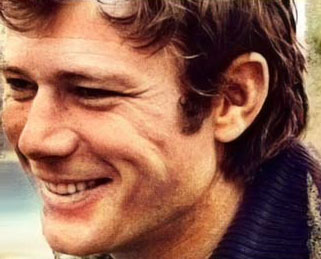 Every guy wanted to be Jim Bronson; a rogue, a loner, a live-for-the- day-store-it-all-on-a-motorcycle-then-hit-the-highway-for-who-knows-where kinda guy. He'd pick a direction, and that was his destiny.
Being a nomadic biker with no ties to anyone or anything was about as romantic a notion as any guy could ever hope for. This, and of course, the bike, were what truly appealed to me. It was such a great and free feeling to watch the show each week, to see Bronson pick up quick-cash jobs in each town, then motor his way to the next.
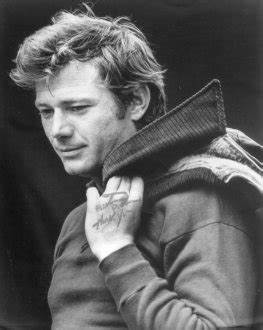 Bronson lived life on his terms only. He didn't get in anybody's way, and, for the most part, nobody got in his. I felt pain when this show went off the air. There'd been far too few programs similar to this style. The only one I can recall is "Route 66" from the '60s. I had two favorite episodes. The first being "The Forest Primeaval" where Bronson crashes his bike deep into the forest and gets lost. It's very spiritual—on par with any episode of "Kung Fu" — as he is forced to live by nature's rules to survive. The second is the episode "The Spitball Kid" where Kurt Russell plays a minor league pitcher who telegraphs his pitches. Of course, Bronson knows how to fix it, and teaches him.
For excellent "Then Came Bronson" episode descriptions, and great Bronson info, visit: Jim Bronson.com It's a great site!
"Police Story" 1973-1977
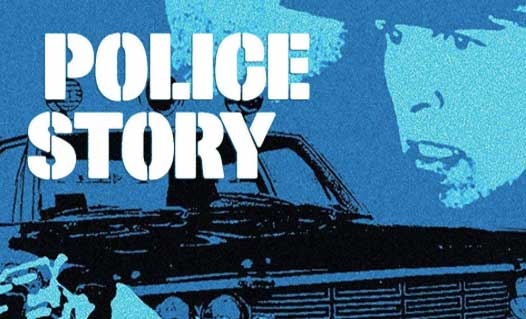
I NEVER missed an episode of "Police Story"! This, for me, was ground-breaking television inspired by the real-life events in the life of cop-turned-best selling novelist Joseph Wambaugh who also created the show. By today's standards, the show can be difficult to watch as it's perhaps a little "too '70s". The dialogues, and the clothing styles take a bit of adjusting to now, but back in the day, this was top-notch television.
By 1977, the show appeared only as a sporadic, non-scheduled series of made-for-TV movies that appeared for ten more years. 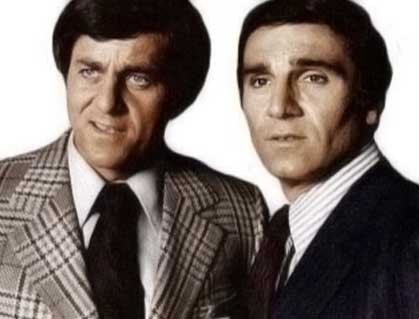 The pairing of actors Tony Lo Bianco and Don Meredith gave us a highly popular tag team of police detectives appearing in several episodes. Veteran actor Vic Morrow also had a turn as a tough and hard-boiled detective named Joe LaFreida.
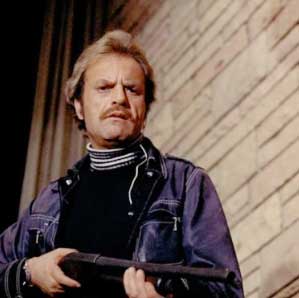 I consider "Police Story" to be in the top ten of the greatest American television shows of the '70s. My favorite episodes happen in the first season. I particularly enjoyed seeing Marjoe Gortner in the episode "Requeim For an Informer" as a struggling heroin addicting trying to overcome his addiction while snitching on a super-villian. Cliff Gorman was great as the over-dedicated cop in the episode "Wyatt Earp Syndrome".
"Little House on the Prairie" 1974-1983
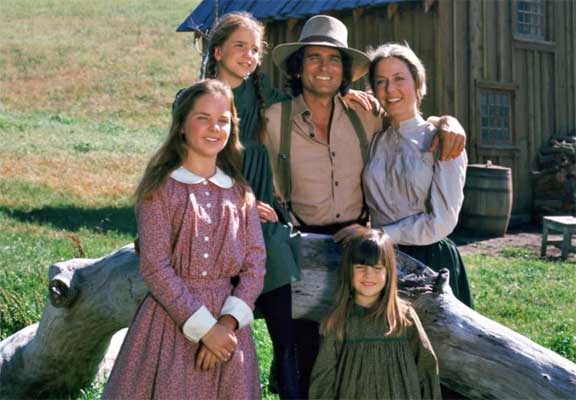
At first I was apprehensive, thinking that there might be a little too much syrup in a show like this, but after the first viewing I was hooked.
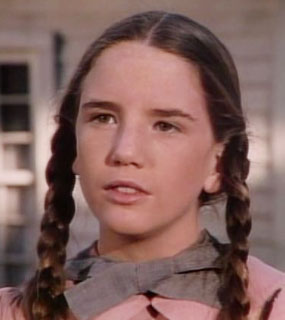 The show is told from the eyes of Laura Ingalls whom we see grow throughout the show's life span. Convincly played by Melissa GilbertThe Laura Ingalls-Wilder character brought a new life into each episode. The program was not only rich in style of both story and characters, it returned something that had been desparately missing from '70s television: morals. Michael Landon, on a bounce-back from "Bonanza", had a true winner on his hands.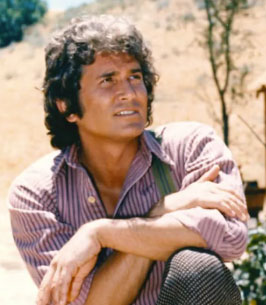
"Litte House on the Prairie" also featured one thing the more wholesome shows like "The Waltons" didn't: an evil-minded self-centered and selfish storekeeper's wife known lovingly to us all as "Mrs. Oleson." Much to husband Lars' chagrin, Harriet Oleson wore the pants in the family. Her and her rotten kids provided the necessary evil for good to overcome.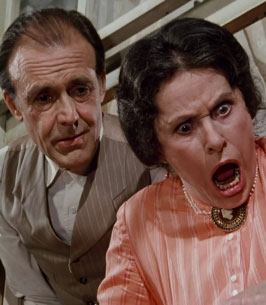
We get to see the Ingalls girls grow from children to adults, and eventually Laura Ingalls marries Alonzo Wilder. I felt the show truly ran out of steam towards the end thus creating an unworthy spin-off: "Little House: A New Beginning".