It Was All About Vinyl
 The '70s were a time when buying an album wasn't just a quick jaunt to the record store, but an event. "Head Shops" were everywhere. Many record stores had their own head shop area. Music Millennium on 32nd and East Burnside was the main place where I bought my records. They too had a head shop upstairs. Millennium, as we Portlander's referred to it, wasn't like a record store at all; it was more like someone's "place" where you went to hang out and look for records.
In 1971-1972, there was an older hippie out front panhandling. His daily mantra was: "Spare change for food and survival?" Sorry pal, any spare change goes toward the next album or some incense, or a couple packs of Zig-Zags. Inside of Millennium was the ambiance of cherry incense and records playing on the staff turntable. Those memories are some of the most vivid and the most cherished.
Another one of my favorite record shops was a small, out-of-the-way place in downtown Portland called Wooden Ship. By no means was it as great as Music Millennium, but it was interesting and fun. I remember another place (the name escapes me now), where you could buy albums without covers for 99 cents each. They came in the white paper sleeve. (more about that here.) I picked up "Best of Cream" from one of those places.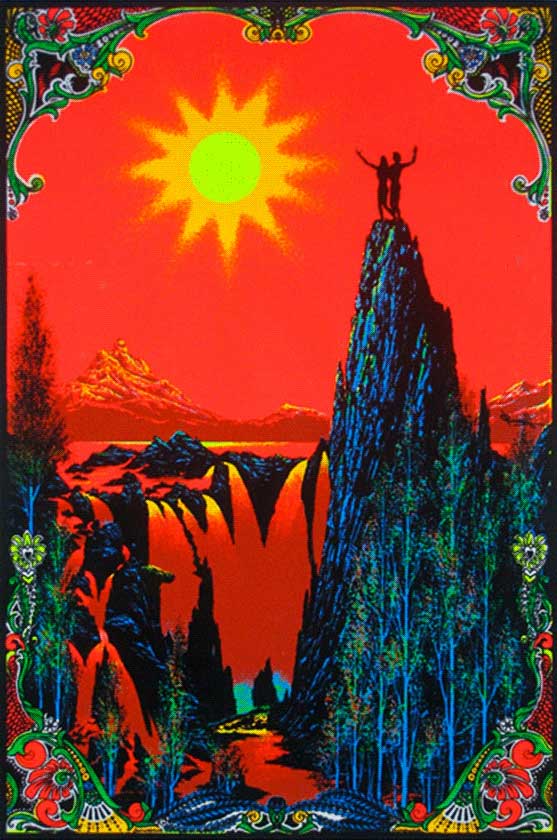 Most of these smaller places served also as head shops, or poster shops.
Albums in general, served as a gallery of some of the finest cover art in the world. So many were genuine works of art, so much that I had to keep rotating the covers that were in the very front of my stacks to feature an "album of the week". Yes cover artist Roger Dean was largely responsible for revolutionizing the album cover art industry. He was also considered the 6th member of Yes for his magnificent contributions to their look. Interestingly, Dean is ambidextrious meaning he can airbrush with both hands and often did his backgrounds in this manner.
Import Albums
The upstairs area of Music Millennium was also where the import records were kept. They were more expensive (naturally), but often featured extra, or different songs than American releases of the same. A good example of this would be Black Sabbath's first album which featured their cover of Crow's "Evil Woman" at the end of side two. Also, the covers were usually a thin paper-like cardboard with a soft matte finish as opposed to the stiff cardboard and American gloss finish covers. They were quite flimsy, but very stylish; imports were most definitely unique. Some imports featured the Vertigo Label which was super-trippy to watch as it spun on the turntable. Side A of the Vertigo label featured the design; side B listed all the songs for both sides.
Import records also offered the serious record buyer the opportunity to get an album that just plain wasn't available in the states yet. If you couldn't wait, and you just had to have it, then an import was probably the best way to go if the band was foreign. Such a case existed for me with "A Tab in the Ocean" by Nektar and The Scorpions' "In Trance" which cost $5.50. It featured a provocative covor of a blonde woman and a white Fender Stratocaster guitar. The import version showed upper body nudity, while the U.S. release had airbrushed that portion out.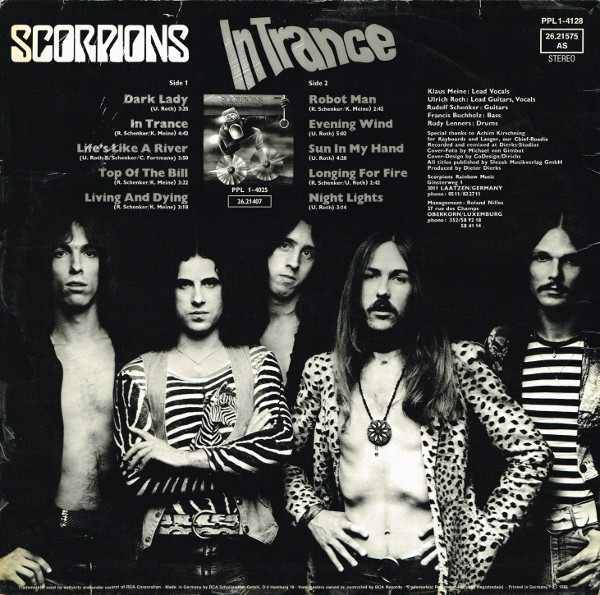
The import version of The Scorpions' "Virgin Killer". was an album just begging to be banned from any shelf. "Virgin Killer" was probably The Scorpions' most monumental cover mistake displayed child pornography. I always felt that their terrrible cover choices they made in the '70s would come back on them in later years. It did. However, aside from a terrible cover, and as an album alone, I did enjoy "Virgin Killer" immensely.
Jimi Hendrix' "Electric Ladyland" was another legendary import: a double-folding album of culturally diverse naked women.
Cut-Outs
Hopefully, you can all remember "Cut-Outs", the albums that never made it in sales, so the albums had a little punch hole, slit, or corner snipped off to indicate what they were. Cut-Outs were cheap, from a dollar, to a $1.99. Most of them were great records, still shrink-wrapped, and otherwise brand new.  I became a true connoisseur of cut outs and usually sought them out first at the record stores. Variety stores with a record department never stocked cut-outs.
I would have to say that at least a third of my rather sizeable record collection in the '70s was comprised of cut-outs. Another benefit was the fact that since they were so cheap, it was easy to experiment with unknown bands and find timeless treasures. It was amazing to me that so many of these records actually became cut-outs. Some of the classics that I picked up for a buck were: Nektar's "Remember the Future" and "Recycled", Lucifer's Friend "Banquet", "Foxtrot" and "Nursery Cryme" by Genesis. My theory was "hey, if you're gonna give 'em away, I'll take 'em."
Bootleg Albums
They were illegal pressings recorded with smuggled equipment. Sometimes that equipment was nothing more than a hand held cassette recorder from a person in the audience. The "engineers" of these albums took an inferior live recording, pressed it to vinyl, and voila! A bootleg was born. Record stores, (the good ones anyway), also carried "Bootleg" albums! I remember purchasing quite a few of them at Music Millennium and Wooden Ship. Back in the early '70s, they usually came in just a plain white cardboard cover with a price and title stamped on the front. Eventually the stamping technique was soon replaced by Xeroxed copies of a photo of the band. The stamped bootlegs soon became hot collector's items. Bootlegs were grab bags; you never knew what you got till you opened them. They were very hit and miss. Mostly, they were turkeys with horrible sound quality. However, there were some that were actually quite awesome. Rarely did they ever sound great, but many of them could be quite acceptable, and extraordinarily clean in sound quality.
 Recalling some of these, I had the mother of all bootleg albums from the Rolling Stones, which is now legendary. It was called "Liver Than You'll Ever Be". I also had bootlegs by The Small Faces, The Grateful Dead, Aerosmith, Pink Floyd, Genesis, Emerson, Lake &Palmer, and Robin Trower. I think my most memorable bootleg was called "My God!" by Jethro Tull. Music Millennium would stamp the prices on the covers of these. They generally went for $3.50 with no returns. Like 'em or not, once you took them out of the store, they were yours forever.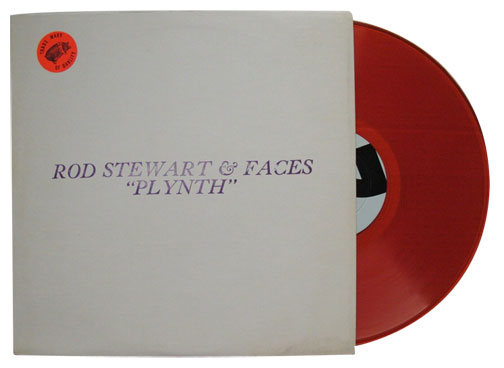
Bootleg albums were a culture unto themselves. For one thing, they didn't belong to an artist's particular catalog of albums. Take Pink Floyd for example. I've had probably 5 or 6 bootlegs by them, yet these albums seem so separate from the mainstream Floyd releases. One of these was called "Raving and Drooling" (which I later learned was a working song title). It had a nearly 30-minute version of "Shine On You Crazy Diamond." The quality was pure crap, and the performance had seen better days as well.
I did have another Pink Floyd bootleg, recorded at the Hollywood Bowl in 1972 just four days before I'd seen them in concert. This one was a double-album, the sound quality not too bad at all, and the performance was fantastic.
Fading Into Obscurity
Soon, the record stores lost their personality, and the smaller shops that I'd come to love were being replaced by larger, and more commercial stores. It wasn't until the latter '70s that they lost their presence altogether, and became mega-chains with zero personality. They were much like going to the local variety store to spend your money. There was no incense to smell, and there certainly wasn't any low, or ambient lighting with a nearby poster room squirreled away behind a curtain of beads. 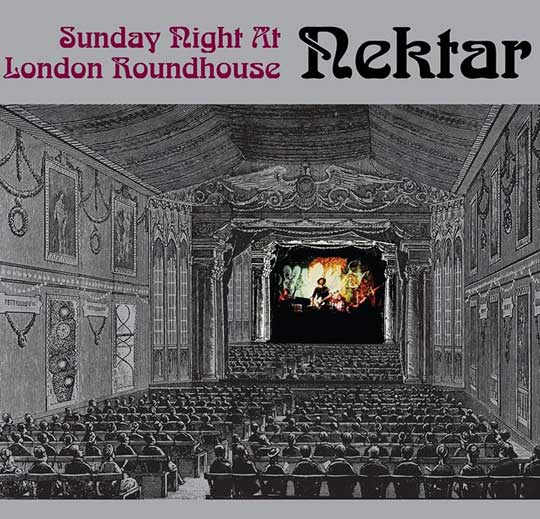
The Black Light rooms were awesome, and oh so mysterious. In that purple glow, you were drawn to the inner sanctum of wild electric color, surreal landscapes, flying dragons, and Escher stairways in blues, greens, reds, and fire yellows. Everybody's Records was an example of the cold, unfriendly, yet larger record store. Another place I recall was "Crystal Ship", but that store didn't last long.
By1978, the great record shop culture took a nose dive. A heavy commercial upswing replaced incense with overhead neons, and substituted posters with more windows. Sadly, these old record stores are to me now as ghosts towns; remnants of something great that was, and can never be again — at least not in the same way.